
If you have been reading about peptide serums and wondering whether one belongs in your routine, you are not alone. I spent months doing the same thing before I tried The Ordinary Multi-Peptide + Copper Peptides 1%. I am Renata, a retired dental hygienist in Spokane, and I test one product at a time for at least eight weeks with a notebook and dated bathroom-mirror photos. This is the exact step-by-step process I used, including what to do, what to skip, and when to call a dermatologist.
A quick word before we start: I am not a doctor and this is not medical advice. Peptide serums are cosmetic products. They can change how skin looks and feels, but they are not treatments for a medical condition. If you have a rash, broken skin, or a diagnosis that affects your skin, ask your dermatologist before adding anything new.
Start with the serum I tested for eight weeks
The Ordinary Multi-Peptide + Copper Peptides 1% is the product I added to my own routine, one step at a time. It is a watery serum that I used on non-retinol nights. Check today's price on Amazon if you want to see it.
Amazon Check Today's Price on Amazon →Step 1: Patch test on your jaw for a week
I know patch testing sounds like the boring part. It is also the part that saves you from a face full of something your skin hates. I have combination skin that is dry on the cheeks and a little oily on the nose and chin, and I have had reactions to products before. So I always patch test on my jaw, right where my ear meets my jawline, for seven days before I put anything on my whole face.
Here is exactly what I did: after cleansing at night, I put a tiny amount of The Ordinary copper peptides serum on a one-inch patch of skin on my jaw, on the left side because it is the side I look at first in the mirror. I started on an evening when the furnace was running and the air was dry. I left it on overnight and checked the spot in the morning for redness, itching, or bumps. By the third night I had almost forgotten I was testing, which I took as a good sign. The spot stayed calm the whole week, no redness, no bumps, just the same skin I started with. I did this for seven nights in a row. Nothing happened for me, which is what I expected, but I still did the full week. My skin is mildly sensitive, and I learned years ago that a reaction on my jaw is a lot easier to deal with than a reaction on my whole face.
If you see redness, swelling, or itching during the patch test, stop and wash the area with a gentle cleanser. That does not mean you can never try a peptide serum. It means this particular one is not for you, or that your skin needs a break. You can also ask a dermatologist whether another formula might be worth trying.
Step 2: Pick the right time of day and the right night
The Ordinary Multi-Peptide + Copper Peptides 1% is a watery serum that I used at night, on nights when I was not using retinol. I want to be very clear about this part because it is the most important thing I learned: I never use two retinol products on the same night, and I never layer copper peptides with retinol on the same night. My routine today, long after the test, alternates. One night I use Olay Retinol Night Cream. The next night I use The Ordinary copper peptides plus my plain moisturizer. They take turns. I keep track in my notebook with a letter system: R for retinol night, P for peptide night, and a blank line for any night I just cleanse and moisturize. Over the months the pattern is right there on the page, and I do not have to trust my memory. Lena says that is very me, and she is not wrong.
Why does the order matter? Retinol and copper peptides are both active ingredients, and my skin does better when I give each one its own night. This is not a medical rule I am handing you. It is what worked for me, and it is what my daughter Lena suggested when she first told me about peptide serums. She lives in Seattle and has been into skincare for years. Her advice was simple: keep the routine simple, and do not stack actives like you are building a sandwich.
If you are not using retinol at all, you have more freedom. You can use a peptide serum in the morning under your moisturizer and SPF, or at night. I chose nights because my mornings already have TruSkin Vitamin C under my mineral SPF, and I did not want to add another step to that side of the day.
Step 3: Start with a few drops on clean, dry skin
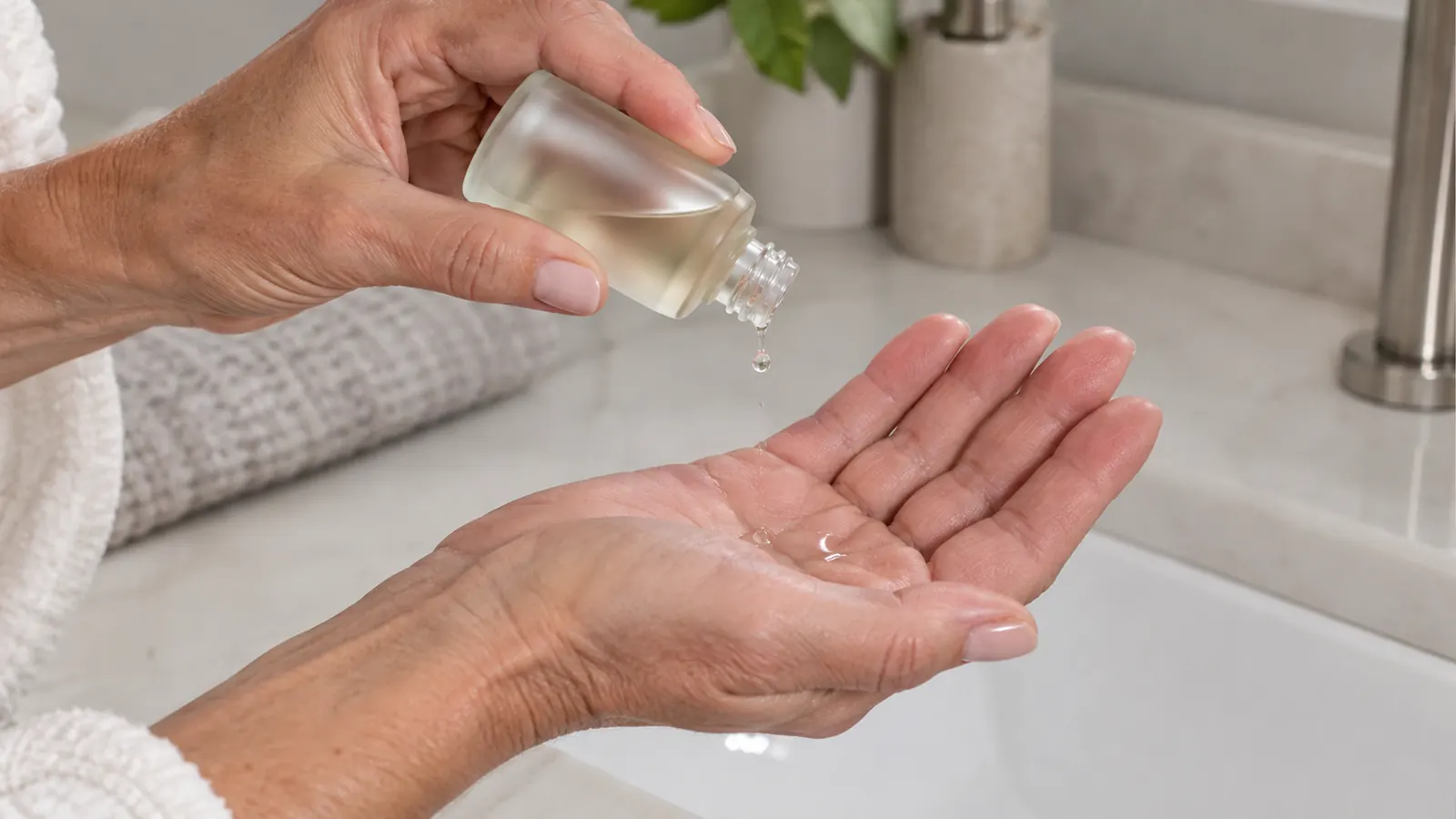
When the patch test week was over, I started using the serum for real. I cleansed my face in the evening, patted it dry, and put three to four drops of The Ordinary copper peptides serum into my palm. The serum is watery and a little blue-tinted, and a few drops cover the whole face without any trouble. I did not use a cotton pad, and I did not mix it with anything in my hand.
The first thing I noticed was that it did not sting. I have had serums that tingle or burn on the first application, and this one did not. It felt like water with a little body to it. I counted the drops the way I used to count instruments before a procedure: three or four for the face, never more. I pressed it in with my fingertips, starting at my cheeks and working outward, and I did not rub. Pressing works better than rubbing for a watery serum, and it keeps the product where I put it. I waited about a minute for it to sink in, then I put my plain fragrance-free moisturizer on top. That is the whole evening routine on peptide nights: cleanse, serum, moisturizer. Nothing else.
One thing I want to mention: I did not change anything else in my routine while I tested this serum. That is the rule I follow with every product. If I added a new cleanser at the same time, I would not know which one changed my skin. Keep everything else the same for at least eight weeks, and you will actually learn something from the experiment.

Step 4: Use it consistently for eight weeks before judging it
Here is the part nobody likes: peptides are not a flashy product. I used The Ordinary copper peptides on non-retinol nights for eight full weeks before I formed an opinion. In the first two weeks, I noticed nothing at all. That is normal and it does not mean the product is failing. My skin did not look different, feel different, or act different. I kept going because I promised myself eight weeks.
Somewhere around week five or six, I started to notice that my cheeks felt more cushioned when I washed my face in the morning. That is the best way I can describe it. The skin around my cheeks looked a little plumper, and my moisturizer seemed to sit on top of my skin differently. I started the trial while Spokane was still grey and the air was dry, so I knew any improvement would have to be real and not just the summer light being kinder to my skin. At the end of week eight I put the first photo next to the last one and looked at them the way I used to compare X-rays: side by side, same window light, no guessing. The change was subtle. It was not a dramatic before-and-after. My fine lines did not vanish, and I did not expect them to. But my skin looked a bit more rested, and that is a real thing I could see in my bathroom-mirror photos.
I gave The Ordinary Multi-Peptide + Copper Peptides 1% a 4 out of 5 in my notebook. It did what I asked it to do, which was to add a little cushion and plumpness to my cheeks without irritating my skin. It did not do more than that, and I would be suspicious of anyone who told you it would. If you want a product that changes your skin overnight, this is not it. If you want a gentle, consistent addition to a simple routine, it is worth a real try.
Step 5: Store it properly and know when to stop
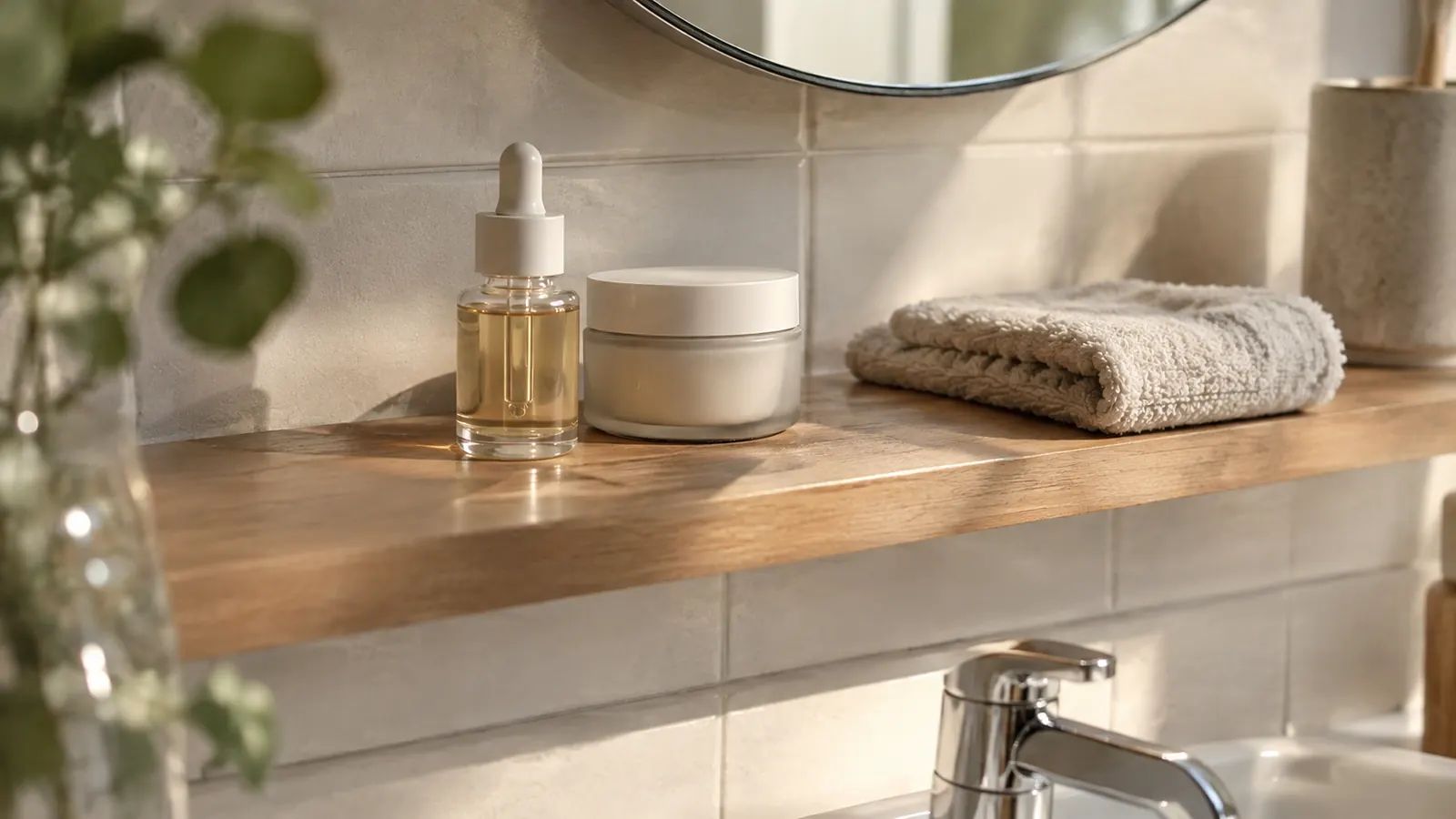
Storage matters more than people think. I keep my serums and night cream on the bathroom shelf above the sink, but The Ordinary copper peptides serum is the one I am careful about. It lives on the same shelf, away from direct window light, with the cap on tight. I do not keep it in the shower, and I do not leave it on the counter in the sun. Heat and light are not friends to any serum.
I also want to tell you when to stop using it. If your skin ever starts to feel tight, sting, or look red in a way that is not your normal complexion, stop and give your skin a break. A product that worked for months can suddenly disagree with you, especially when the seasons change. Spokane winters are dry, and I have learned to pay attention to how my skin feels in January versus July. Last winter I had a week when my cheeks felt tight no matter what I put on, so I set the serum aside for four nights and kept things to my cleanser, moisturizer, and mineral SPF. When I picked the serum back up, my skin was fine, and that little break cost me nothing. If something changes, I do not push through it. I stop, I simplify, and I let my skin settle.
And if you ever see anything that worries you, a rash, swelling, or a patch of skin that will not heal, do not ask the internet. See a dermatologist. I spent thirty years looking closely at faces under a bright lamp, and I still believe the smartest thing you can do for your skin is to let a professional look at it when something seems off.
What Else Helps
A peptide serum works best inside a routine that is already gentle. For me, that means a cream cleanser, a plain fragrance-free moisturizer, and a mineral SPF every morning. The SPF is the non-negotiable part. I use TruSkin Vitamin C in the morning under my mineral SPF, and on nights when I am not using retinol, I use The Ordinary copper peptides. The serum is not a replacement for sunscreen, and it is not a replacement for moisturizer. It is an extra step, not a shortcut.
I also keep a small notebook and take dated bathroom-mirror photos in the same window light. That sounds fussy, but it is the only way I can trust my memory. Skin changes slowly, and a photo from eight weeks ago will tell you more than your memory will. If you try The Ordinary Multi-Peptide + Copper Peptides 1%, give it the same courtesy: a real trial, a simple routine, and an honest look at what changed and what did not.
The change was subtle. My fine lines did not vanish, and I did not expect them to. But my skin looked a bit more rested, and that is a real thing I could see in my bathroom-mirror photos.
Give it the same eight-week trial I did
The Ordinary Multi-Peptide + Copper Peptides 1% is the serum I added to my routine one step at a time. If you want to try it, check today's price on Amazon. Patch test first, keep the rest of your routine the same, and give it eight weeks before you decide.
Amazon Check Today's Price on Amazon →