
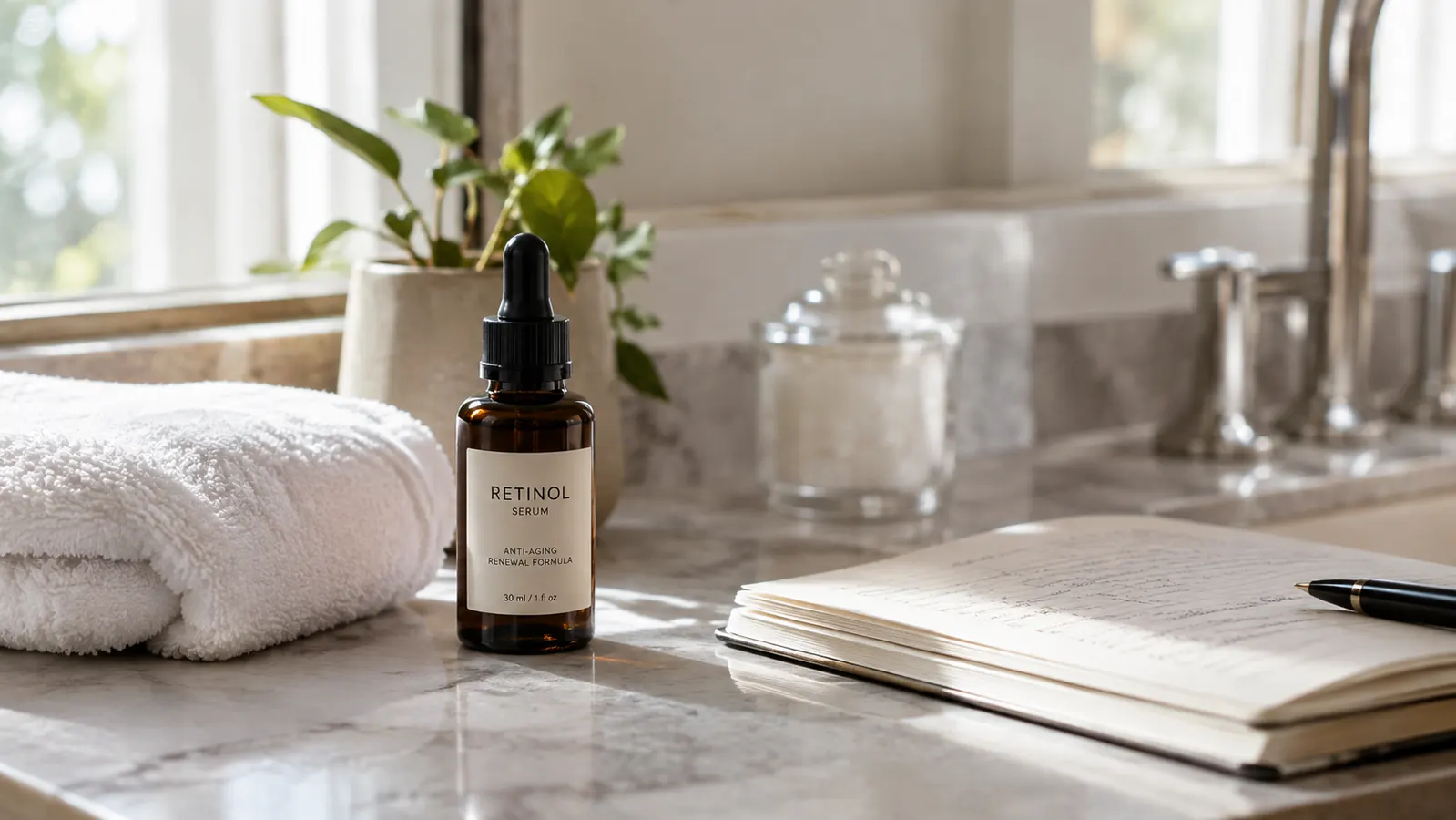
Ask ten people over 45 which retinol is gentler and you'll get ten answers, most of them based on one person's face. Here is mine. I'm 58, my cheeks run dry, my nose runs oily, and the first time I tried retinol, years ago, I looked like I'd been out in a windstorm for a week. So when I set out to compare the CeraVe Retinol Serum with The Ordinary's retinol in squalane, the question I cared about was not which one was stronger. It was which one I could actually use every night without wrecking my skin.
The short answer is that the CeraVe serum was the gentler one for me, and it wasn't close. The reason is not the retinol itself. It's what sits in the bottle around the retinol. CeraVe pairs it with niacinamide and hyaluronic acid, so the skin gets support while it adjusts. The Ordinary's version is a bare retinol in squalane, with nothing to buffer it, which is exactly the kind of formula that punished me when I was younger and overconfident. Both can work. Only one of them forgives a mistake.
| CeraVe Retinol Serum | The Ordinary Retinol in Squalane | |
|---|---|---|
| Texture | Lightweight and lotion-like. It spreads like a moisturizer, sinks in, and leaves no film. | A thin oil. A few drops feel slippery for a minute, then settle down. |
| What else is in the bottle | Niacinamide and hyaluronic acid, so the retinol is not working alone. | Retinol and squalane, full stop. You add everything else yourself. |
| Gentleness for dry, sensitive skin | My flaking was mild, mostly around the nose, and gone by week four. | Squalane is kind, but the retinol has no buffer. I flaked badly when I pushed the pace. |
| Fragrance | Fragrance-free. | Fragrance-free. |
| Easing in | Easy to start every third night, then every other night, then nightly. The lotion feel helps. | Workable, but the pacing is entirely on you. There is no cushion if you go too fast. |
| Room to customize | One strength, pre-mixed. You take it as it comes. | You can mix a drop into your own moisturizer to dial the strength down on cranky nights. |
| Ingredient transparency | A blended formula; the retinol is part of a longer list. | A short label that names the active plainly, the way this brand is known for. |
| Best for | Skin over 45 that runs dry or sensitive and wants one simple nightly bottle. | People who like a bare-bones formula and already have a moisturizer they trust. |
Where CeraVe Wins
The CeraVe bottle does more than carry retinol. Niacinamide is an ingredient my skin has always tolerated well, and hyaluronic acid pulls in moisture, which is exactly what a dry cheek needs while it adjusts to a new active. That combination is why my first weeks were so uneventful. There was some dryness around my nose and a little flaking, but nothing that made me want to quit, and by week four it had settled. My skin looked calmer than it had before I started.
The texture matters more than it sounds like it would. On a dry Spokane night in January, the last thing I want is a watery serum that evaporates before I finish the other cheek. The CeraVe serum spreads like a light moisturizer and sinks in without a film, so I could follow it with my plain fragrance-free moisturizer and go to bed without feeling layered. For skin over 45, that ease is half the battle. A product that feels good going on gets used, and a product that gets used is the one that shows up in the photos.
Over eight weeks, my bathroom-mirror photos showed the same thing I felt: the texture across my cheeks looked smoother, and the forehead lines looked a little softer. Not gone. Nobody should promise you gone. But the photos did not lie, and neither did my notebook. I gave the CeraVe serum a 4.5 out of 5, and the only reason it is not a 5 is that lines are still lines. A serum that erased them would be something else entirely.
It is also worth saying that the CeraVe serum has thousands of reviews on Amazon and a strong star rating, which mattered to me less than my own photos but more than zero. I read the one-star reviews before I started, and the pattern was always the same: someone used it too often too fast, or skipped the SPF, or expected lines to vanish in a week. The product is not a magic wand. It is a well-made retinol serum that behaves the way retinol serums behave when you respect them.
Where The Ordinary Wins
I need to be fair here, because the worst experience I ever had with The Ordinary's retinol was my own fault. Years ago I used it too often too fast, the way beginners do, and my skin flaked for two weeks. The product did what retinol does when you crowd it. A more patient person, or a younger face, might never have that problem. The squalane base is genuinely kind. It is a thin oil that feels soothing as it carries the retinol, and for some skins that simple base is enough.
Where The Ordinary genuinely wins is control. Because the formula is bare, you decide the buffer. On a night when my skin felt tight, I could have mixed a drop into my moisturizer and dialed the whole thing down. You cannot do that with the CeraVe serum. It arrives pre-mixed at one strength, and you take it as it comes. The Ordinary also names its actives plainly, which I respect. There is no mystery about what is in the bottle, and for someone who reacts to extra ingredients, a shorter list is a real advantage.
For the right person, that flexibility makes it the better tool. If you already have a moisturizer you love, if you are disciplined about pacing, and if you like knowing exactly what you are putting on your face, The Ordinary retinol in squalane gives you more room to work. It is also worth considering if your skin is bothered by niacinamide, since that happens to some people. Fewer ingredients means fewer things to react to, and that is a legitimate reason to pick it over the CeraVe serum.
How I Tested Both
I test one product at a time for at least eight weeks, and I keep a notebook and bathroom-mirror photos in the same window light. I patch test on my jaw first, every time. For the CeraVe serum, the patch went on one dry winter evening, a pea-sized amount on my jaw, and I checked it at the 12-hour mark and again the next morning. Nothing happened, so I started every third night, moved to every other night after about three weeks, then settled into nightly use. That ramp is the whole trick with retinol, and it is why I blame my own pacing, not the product, for the flaking I got from The Ordinary years ago.
My skin is combination: dry on the cheeks, a little oily on the nose and chin, with fine lines at the eyes and forehead and some sun spots on my left cheek from years of driving. Spokane winters are dry, which makes a serum's texture matter more than it would in a humid climate. I kept everything else the same through both tests: a gentle cream cleanser, a plain fragrance-free moisturizer, and a mineral SPF every morning. If you are comparing these two, do the same, or you will not know which product did what.
My notebook entries for the CeraVe serum read like a boring diary. Week one: a little dry around the nose. Week two: still a little flaky, nothing scary. Week three: flaking almost gone, skin feels fine. Week four: smoother, and the forehead lines look softer in the photos. Week eight: keeping it. The only dramatic entry came on day 11, when I forgot I had used the serum the night before and applied again the next night, two nights in a row. By the next morning my nose was tight and a little pink. I backed off for three nights, used only my plain moisturizer, and went back to every third night. The lesson was in my own handwriting: respect the pace. Boring is good. Boring means the product is doing its job without drama.

The Routine Difference That Mattered
The practical difference between these two bottles showed up in the first month. With CeraVe, the niacinamide and hyaluronic acid gave my skin something to hold onto while it adjusted, and my dryness was mild and short-lived. In week two of the CeraVe test, after three applications, my cheeks felt tight by eleven in the morning, which is a sign I have learned to take seriously. I dialed back to every third night and the tightness disappeared within two days. With The Ordinary, there is no middle ground. The retinol arrives undiluted, and the only buffer is the squalane and whatever you add yourself. The Ordinary version never gave me that kind of measurable, hourly feedback because I never got past the first two weeks without flaking. My own notes from years ago say "red around nose, stopped." That makes it a better product for someone who already knows their pace, and a harder one for a beginner.
Here is the thing nobody puts on the label: the gentler serum is the one you will actually keep using. A product that makes you flake in week two tends to end up in a drawer. The CeraVe serum survived the dry weeks, and by week four it was part of my night routine without any negotiation. That consistency is what produced the smoother look in my photos. The Ordinary can get you there too, but it asks more of you on the way.
One more thing belongs in any retinol conversation: the morning SPF. Retinol makes skin more sensitive to the sun, and I have enough sun spots on my left cheek to take that seriously. Before I started, I counted eleven spots on my left cheek in the spring light. At week eight, the photos showed the same eleven, but two of them looked a shade lighter. That is a small shift, but it tells me the SPF was doing its job while the serum worked underneath. I used a mineral SPF every morning during my CeraVe test, and I would not use either serum without it. Sunscreen is non-negotiable for me, and it should be for anyone over 45. If you cannot commit to daily sunscreen, pick a different product entirely.
One practical note: the CeraVe bottle is small, which makes it easy to pack. I have taken it on weekend trips to see my daughter Lena in Seattle, and it has traveled well without leaking or taking up real space in a toiletry bag. The Ordinary bottle is just as small, so this is not a reason to choose one over the other. It is simply a detail that made the CeraVe serum easy to keep in my routine.
The CeraVe serum survived the dry weeks, and by week four it was part of my night routine without any negotiation.
Want the gentler start? This is the bottle that carried me through week two.
The CeraVe Retinol Serum pairs retinol with niacinamide and hyaluronic acid, and it is the one I kept on my bathroom shelf. It holds a strong star rating on Amazon with thousands of reviews. My story is simple: it eased me into nightly retinol without a rebellion.
Amazon Check Today's Price on Amazon →Who Should Buy Which
Buy the CeraVe serum if your skin is dry, sensitive, or easily flaked, if you are new to retinol, or if you want one bottle that does the whole job without you having to think about it. It is the choice for skin over 45 that wants a smoother look without a month of peeling. Patch test on your jaw first, start every third night, and give it four full weeks before you judge it. My photos looked different by then, and so did my opinion.
Buy The Ordinary retinol in squalane if you already know your pace, if you have a moisturizer system you trust, or if your skin dislikes extra ingredients and you want the shortest label possible. It is also the one to pick if you want to mix your retinol into your own products and control the strength night by night. Just do what I failed to do the first time: start slow, and let your skin set the schedule. Patch test first, and do not let anyone rush you.
The bottom line is that for my skin, at 58, in a dry climate, the CeraVe serum was the gentler and easier product to live with. Your skin is not mine. Patch test, keep a notebook, take your photos in the same light, and see a dermatologist if anything worries you. That advice is worth more than any bottle, including these two.
Start with the gentler serum
The CeraVe Retinol Serum is the bottle I reach for on nights when my skin feels fragile. It is fragrance-free, easy to ease into, and it carries a strong star rating with thousands of reviews on Amazon. Your results will be your own, but this is where I would start.
Amazon Check Today's Price on Amazon →