

For years I did my morning skincare in the wrong order. I would wash my face, put on moisturizer, and then, if I remembered, sunscreen. An older vitamin C cream I had bought sat in the back of the bathroom cabinet because every time I tried it, my sunscreen pilled and my face felt heavy by noon. I figured vitamin C just did not suit my routine. Then my daughter Lena asked me one question: was I putting the vitamin C on before or after my moisturizer? I had no idea it mattered. It does. This is the routine I settled on after testing it for eight weeks, and it is the one I still use every morning.
The product that finally worked for me is the TruSkin Vitamin C Serum, a 1 fl oz amber glass dropper bottle with hyaluronic acid. I use three to four drops every morning under my mineral SPF. It has a faint scent I do not mind and a slight tingle that disappeared after the first week. My skin looked brighter by about week four, and the sun spots on my left cheek looked a little lighter by week eight. Not gone, but lighter. Here is exactly how I layer it, step by step, including the mistakes I made so you do not have to.
Start with a vitamin C serum that plays nice with sunscreen
The TruSkin Vitamin C Serum is the one I reach for every morning. It layers cleanly under mineral SPF and has thousands of reviews on Amazon to back it up.
Amazon Check Today's Price on Amazon →Step 1: Wash your face and pat it mostly dry
Vitamin C works best on clean skin, but it does not need a bone-dry face. In fact, a little dampness helps the serum spread more evenly. I wash with a gentle cream cleanser, the same one I have used for years, and then I pat my face with a towel until it is just barely damp. If I let my face dry completely, I need an extra drop of serum to cover the same area. If it is dripping wet, the serum slides around and feels watery. Mostly dry is the sweet spot.
One thing I learned the hard way: do not use a scrub or a cleansing brush on the same morning as your vitamin C. The combination was too much for my cheeks and left them feeling raw. A plain, gentle wash is all you need. Save the exfoliating for a different time of day or a different day entirely.
If your face is still damp from the towel, give it a minute. I used to apply serum to wet skin because I read somewhere that it helps things absorb, and with vitamin C that was exactly the wrong idea for me. Water on the skin seemed to make the tingle stronger and the serum spread thin and uneven. Now I pat my face, brush my teeth, and come back to the sink. By then my skin feels dry to the touch but not tight, and the serum goes on smoothly.
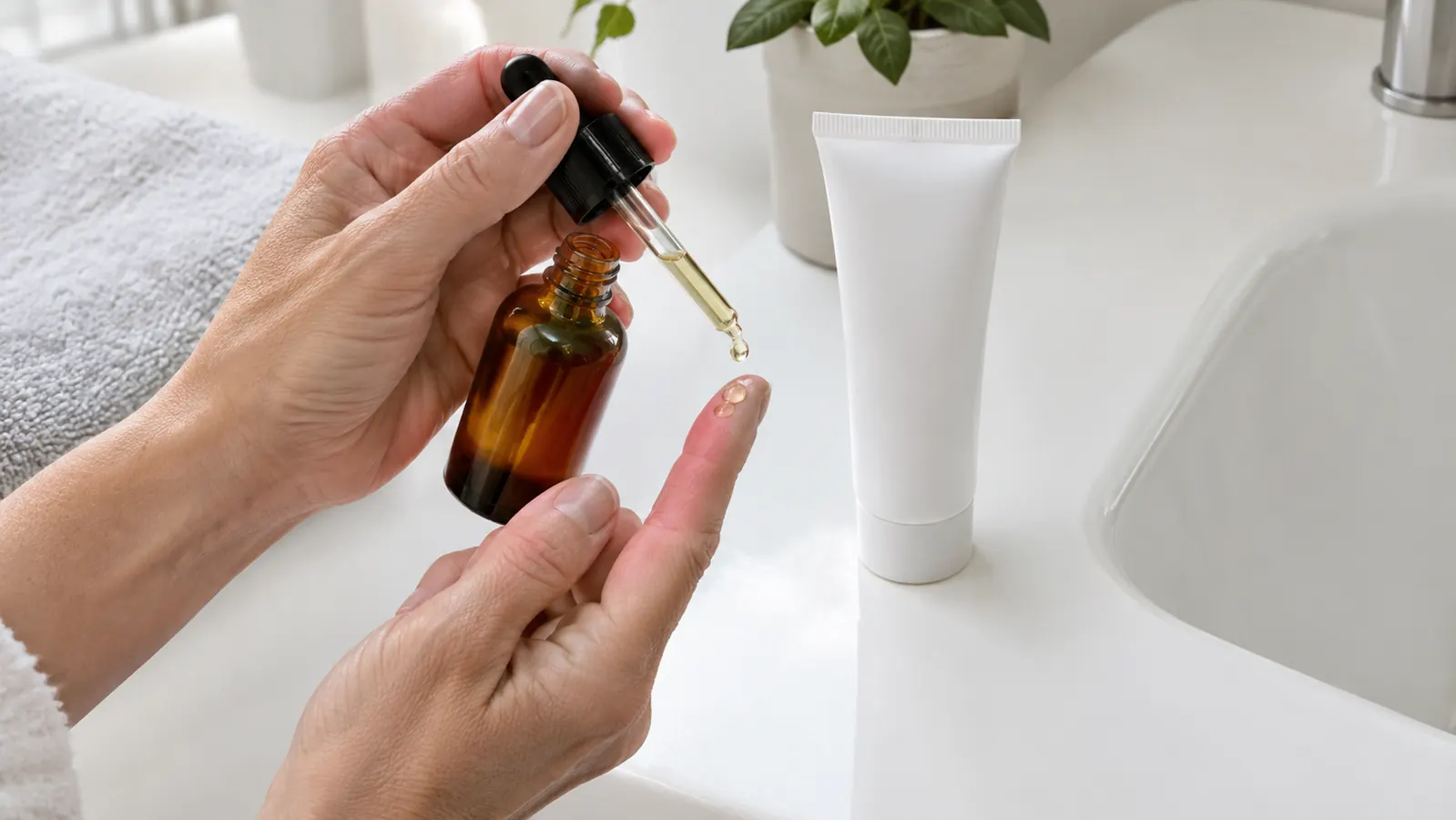
Step 2: Apply three to four drops of vitamin C serum to your face
I put three to four drops of the TruSkin serum into one palm, then press my palms together and pat the serum onto my face. I start with my cheeks, where the sun spots are, and finish with my forehead, nose, and chin. I do not rub it in hard. Pressing and patting feels gentler and seems to help it absorb without dragging the skin. A little goes a long way with this bottle. Three drops covers my whole face, and I have never needed more than four.
The first week, I felt a very slight tingle for a minute or two after applying. It was not unpleasant, and it stopped happening after about a week. If you feel a strong sting or your face turns red, that is not normal. Wash it off and try again on a different day, or talk to a dermatologist. Everyone's skin is different, and there is no shame in being the person who patches things out first.
Where you put the drops matters too. I start on the cheeks and forehead, where my skin is driest and where the sun spots sit, then use whatever is left on my fingertips for the nose and chin. I keep it away from the corners of my eyes and the edges of my nostrils, which are the two places most likely to sting. I do not rub hard. A few light presses with flat fingers spread it more evenly than any amount of scrubbing, and it is gentler on skin that is over fifty.
Step 3: Wait a full two minutes before anything else touches your face
This is the step I used to skip, and it is the one that caused most of my pilling. Vitamin C needs a little time to settle into the skin. When I layered moisturizer on top right away, the serum seemed to sit on the surface instead of absorbing, and by midday my cheeks felt tight. When I waited two full minutes, the tightness went away. I now use that time to brush my teeth, which is a handy way to make sure I actually wait.
Two minutes is not a magic number I invented. It is the amount of time that worked for me, and it fits neatly while I brush my teeth. If you are in a hurry, even sixty seconds is better than nothing. But the full two minutes made the difference between layers that pilled and layers that sat smoothly.
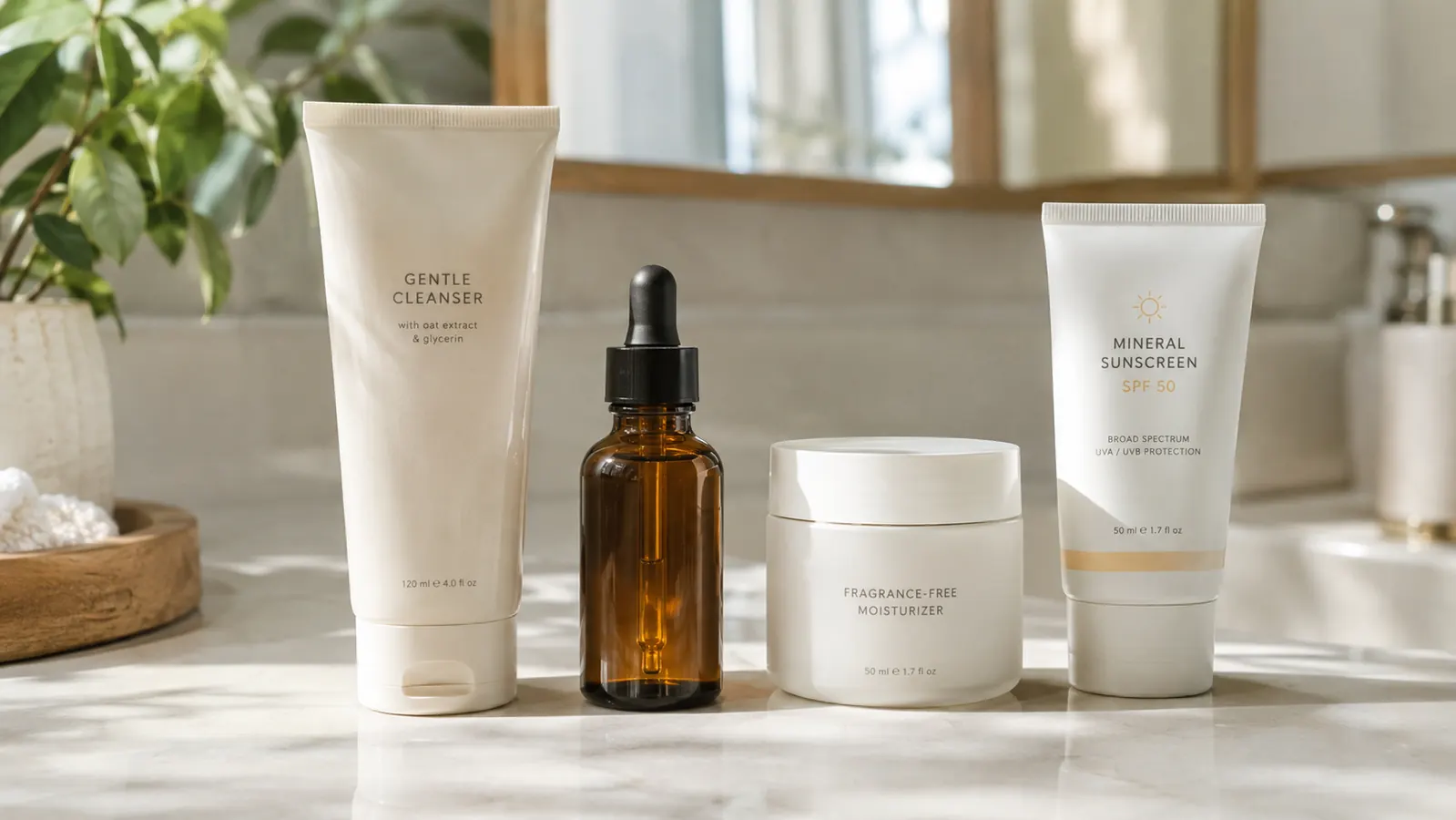
Step 4: Put on moisturizer, then sunscreen, in that order
After the two minutes are up, I apply my plain fragrance-free moisturizer. I let that sink in for a minute or two as well, and then I put on my mineral SPF. The order matters: serum first, then moisturizer, then sunscreen. Sunscreen is the last step, and it should always be the last step. If you put moisturizer or anything else on top of your sunscreen, you can disturb the layer that is supposed to protect you.
I use a mineral SPF because it is what my skin tolerates best. Chemical sunscreens have never stung me, but mineral ones feel calmer on my cheeks. The TruSkin serum has worked well under both, as long as I give it those two minutes. If your sunscreen pills or rolls up over your serum, the usual culprit is not enough wait time between layers, not a bad product match.
On mornings when I am out in the garden or driving across town, I am more careful with the sunscreen than with anything else in this routine. A vitamin C serum is a nice extra. Sunscreen is the step that actually protects the skin you are trying to care for. I use about a quarter teaspoon for my face and neck, I do not skip my ears, and I reapply if I am outside for a long stretch. If you only have the patience for one product in the morning, make it the sunscreen.
Step 5: Store the serum away from light and check the color
Vitamin C is sensitive to light and air. The TruSkin bottle is amber glass for a reason, and I keep it in my medicine cabinet, away from the window light that hits my bathroom shelf. Over time, the serum can darken a little in the bottle. That is normal and does not mean it has gone bad. I use mine within a few months of opening it, and I keep an eye on the color. If it ever turned dark brown or smelled off, I would replace it.
This is also the step where I remind you to patch test. I put a drop of the serum on my jaw every time I open a new bottle, and I wait a day to see how my skin reacts. It takes almost no time, and it has saved me from more than one bad reaction over the years. My daughter Lena thinks I am overly careful, but after thirty years of looking at faces under a bright dental lamp, I have seen what a bad reaction looks like. A patch test is a small price for peace of mind.
What Else Helps
A few things made the biggest difference in my routine beyond the order of the steps. First, I use the serum every single morning, not just on days when I remember. Consistency matters more than perfection. Second, I keep my moisturizer plain and fragrance-free. A complicated moisturizer with active ingredients can compete with the serum and make irritation more likely. Third, I use sunscreen every morning, even in the gray Spokane winter. The sun spots on my left cheek came from years of driving with the sun on that side of my face, and I am not interested in adding more.
I also learned to be patient. The TruSkin serum did not change my skin overnight. The brightness showed up around week four, and the sun spots looked lighter around week eight. If you try this routine and see nothing in the first week, that is normal. Give it eight weeks, take a photo in the same window light every week, and compare. That is the method I use for everything I test, and it is the only way I trust my own eyes.
Mistakes I Made So You Do Not Have To
The first mistake was layering too many things. For a while I put the TruSkin serum on, then a separate hydrating serum, then an eye cream, then moisturizer, then sunscreen. By the end, my sunscreen was pilling into little gray rolls along my jaw. Cutting back to serum, plain moisturizer and sunscreen fixed that within a day. Fewer layers also meant each one had room to settle, and my face stopped feeling sticky by mid-morning.
The second mistake was leaving the bottle on the windowsill. I liked seeing it there, and that was the problem. Light and warmth are hard on vitamin C, and the serum started to look a shade darker sooner than I expected. Now the TruSkin bottle lives in the medicine cabinet with the cap screwed on tight, and I check the color every week or so. If a vitamin C serum turns noticeably dark orange or brown, I would replace it rather than keep using it.
The third mistake was impatience. I wanted to see brighter skin in a week, and when I did not, I almost quit. My dated bathroom-mirror photos are what kept me going. Around week six I could finally see that my complexion looked a little more even in the same window light, and by week eight the spots on my left cheek looked a bit lighter. Not gone, just softer. That kind of change only shows up if you give a product the full eight weeks.
The two-minute wait between serum and moisturizer was the difference between a morning routine that pilled and one I have used every morning for months.
Give your morning routine the two-minute fix
If you have been skipping vitamin C because your layers pilled, try the TruSkin Vitamin C Serum with the wait time built in. It is the bottle I reach for every single morning.
Amazon Check Today's Price on Amazon →