

If your skin is sensitive, the idea of starting a retinol serum probably sounds like a dare. I know because I felt the same way. Years ago I tried a retinol and used it every single night right out of the gate. My face turned red, my nose peeled, and I gave up for a long time. When I finally worked up the nerve to try again, I did it differently. I started with CeraVe Retinol Serum, and this time it went the way it was supposed to. This is the exact step-by-step routine I used, written for anyone whose skin gets cranky at the first sign of change.
I am Renata, a retired dental hygienist in Spokane, Washington. I spent thirty years looking at faces up close under a bright lamp, so I notice redness and dryness the way other people notice a loud noise. I also test one product at a time for at least eight weeks, keep a notebook, and take bathroom-mirror photos in the same window light. What follows is what actually happened when I introduced CeraVe Retinol Serum to my combination, easily irritated skin.
Start retinol the way your skin can actually handle it
CeraVe Retinol Serum is the gentle, fragrance-free starting point I used after years of being afraid to try again. It is lightweight, lotion-like, and easy to work into a slow routine.
Amazon Check Today's Price on Amazon →Step 1: Patch test on your jaw for a full week
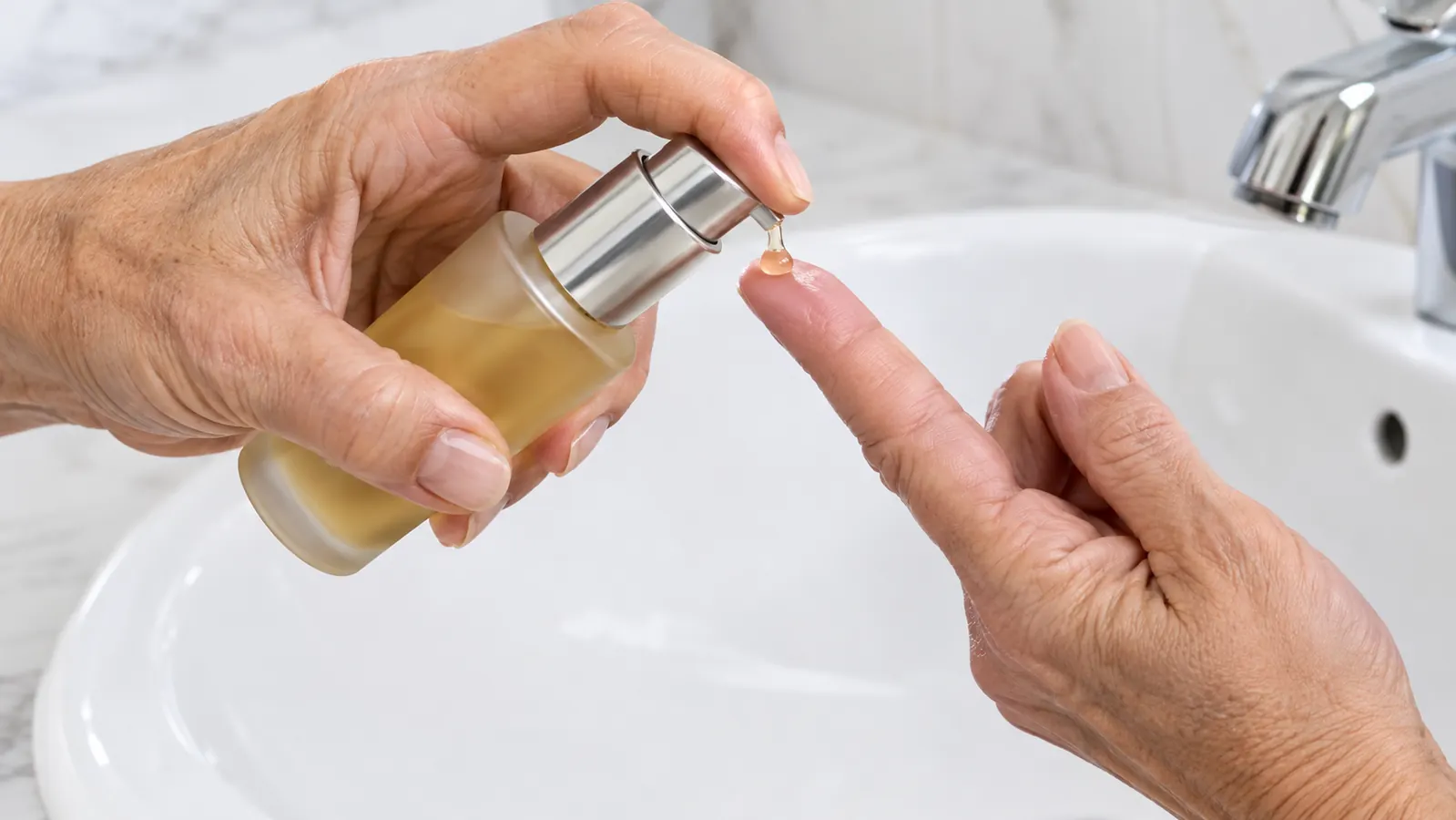
Before the serum ever touches your whole face, test it on a small patch of skin. I chose the side of my jaw, right where my ear meets my neck. A pea-sized amount, once a day, for seven days. If your skin turns red, burns, or breaks out in that one spot, stop and talk to a dermatologist. If it just sits there quietly, you are clear to move on.
I know a week feels like forever when you are eager to start. But the patch test is the difference between a slow, boring success and a red, peeling face that sets you back a month. I have made that exact mistake, and I would rather you learn from mine.
One more thing: do your patch test at night. Retinol can make skin more sensitive to sunlight, and testing it in the evening keeps the sun out of the equation while you figure out how your skin reacts. I did mine after dinner, in the same bathroom where I do my whole routine, and I wrote a line in my notebook each night: date, spot, how it felt by morning. By day four I had stopped checking the spot every hour, which is how I knew it was going to be fine.
Step 2: Start every third night, not every night
This is the step I skipped the first time, and it is the step that made all the difference the second time. I started CeraVe Retinol Serum every third night. Monday night, skip Tuesday, skip Wednesday, Thursday night. That gave my skin two full days to recover between applications.
I used a pea-sized amount for my whole face. That sounds too small, but it is the right amount. I dotted it on my forehead, each cheek, my chin, and my nose, then smoothed it in gently. I did not rub hard. I did not add a second layer. I let it sink in for a few minutes before anything else went on top. The serum itself is lightweight and lotion-like, so a single pump spread further than I expected. One pump was plenty, and one pump is still plenty now.
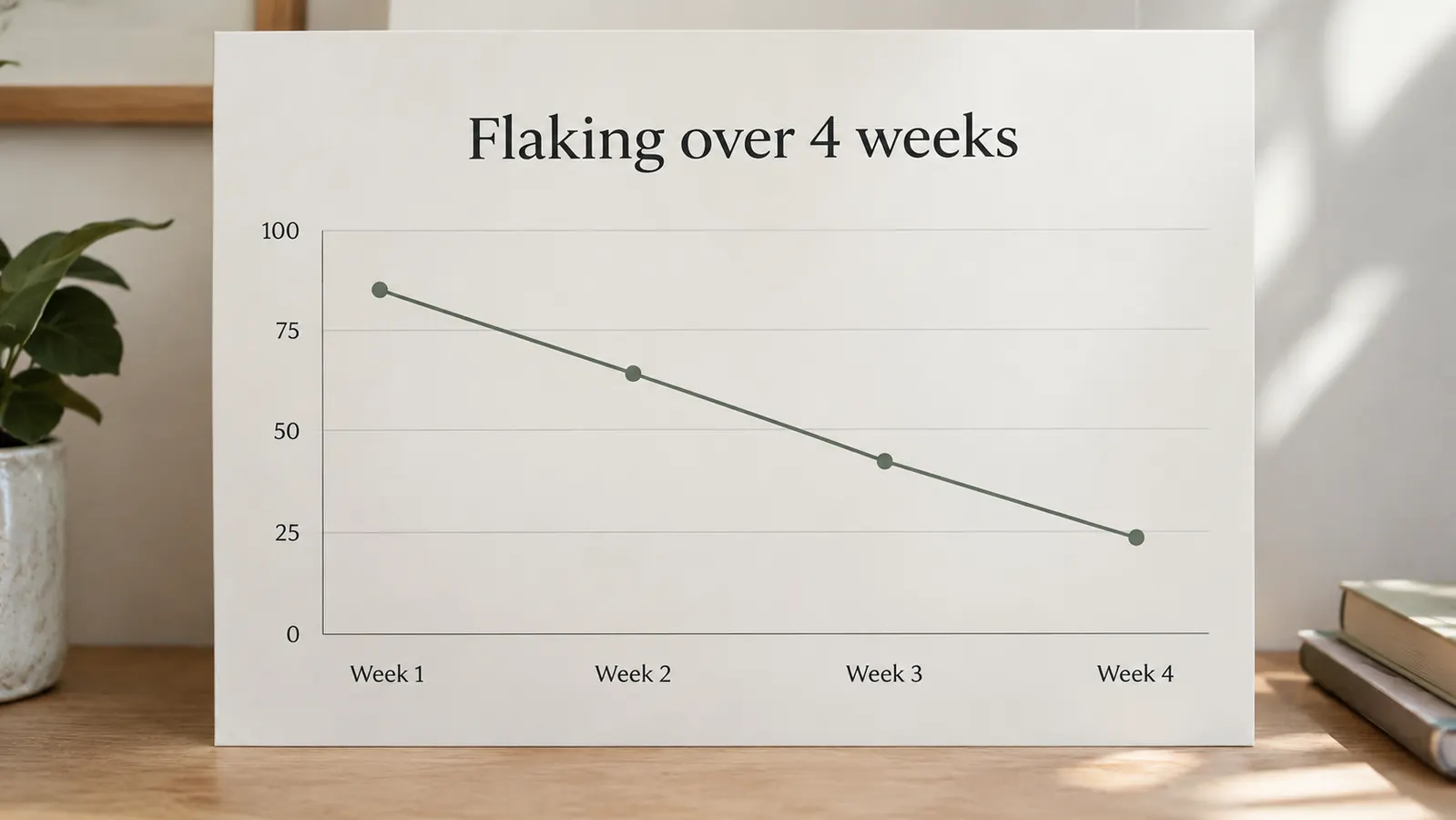
The first two weeks, I had some dryness and a little flaking around my nose. That is normal, and it is exactly why the every-third-night schedule exists. By week four, the flaking was gone and my skin had settled down. I remember the exact morning it stopped mattering: a Tuesday, about three and a half weeks in, when I looked in the mirror and did not automatically reach for extra moisturizer on my nose. That was the first day my skin felt like itself again.
Step 3: Build up to every other night, then nightly
After about three weeks on the every-third-night schedule, my skin was calm. No redness, no burning, just the normal dryness around my nose that had already faded. That was my cue to move to every other night. I kept that pace for another few weeks before I tried nightly. The whole ramp-up took about six weeks from the first application to the first nightly one, and I did not rush any part of it.
The rule I followed: if my skin felt tight, looked red, or started flaking again, I would drop back a step. Retinol is not a race. A slower ramp-up that your skin tolerates will give you better results than a fast one that ends with you quitting. I had one evening in week five when my cheeks felt tight after cleansing, so I skipped the serum that night and just used my plain moisturizer. The next night my skin felt normal, and I went back to the every-other-night pace for another week before trying nightly again.
By the time I reached nightly use, my skin was used to it. The forehead lines looked a bit softer in my photos, and my skin texture looked smoother overall. The lines did not vanish. Nothing about retinol is magic. But the change was real, and it showed up in the mirror before it showed up in my notebook. In my week-eight photo, taken in the same window light as my starting photo, the fine lines at my forehead were less pronounced and the overall texture looked calmer. It was not a dramatic difference, but it was a visible one.
Step 4: Keep the rest of your routine boring
The biggest mistake I see people make is adding retinol and three other new products at the same time. If your skin reacts, you will have no idea which product caused it. When I started CeraVe Retinol Serum, I kept everything else exactly the same: a gentle cream cleanser, a plain fragrance-free moisturizer, and my mineral SPF every morning. I did not introduce a new toner, a new eye cream, or a new mask during those first eight weeks. Nothing else changed, so when my skin improved, I knew exactly what to credit.
I also moved my retinol to the night routine, which is where it belongs. In the morning I used my usual moisturizer and sunscreen. At night, after cleansing, I applied the serum, waited a few minutes, and sealed it with my plain moisturizer. That sandwich method, serum between moisturizer and nothing else, kept the dryness manageable. I waited about five minutes after cleansing, until my face felt dry to the touch, then applied the serum, then waited another few minutes before the moisturizer. It added maybe ten minutes to my evening routine, and it was worth every one of them.
And please, do not use two retinol products on the same night. I know it is tempting to layer a retinol serum and a retinol cream to speed things up. It does not speed anything up. It just irritates your skin. One retinol product per night, period. I keep a separate retinol night cream in my rotation now, but it goes on different nights, never on top of the serum. My skin tolerates that arrangement fine, and I have no interest in testing what would happen if I stacked them.
Step 5: Wear mineral SPF every single morning
Retinol makes your skin more sensitive to the sun, and I am not going to sugarcoat this: if you use retinol without daily sunscreen, you are undoing a lot of the good. I have used a mineral SPF every morning for years, and I kept that up without missing a day while my skin adjusted to the serum. I apply it after my moisturizer, before any makeup, and I reapply if I am going to be outside for a long stretch. It is the cheapest anti-aging step in my whole routine, and it is the one I never skip.
Spokane winters are dry and the summers are bright, so sunscreen is a year-round habit here, not a summer-only one. In January I put it on before I drive to the grocery store, and in July I put it on before I step into the garden. The sun does not take a break in the winter, and neither does my SPF. I use a mineral formula because it sits well on my combination skin, and I have found one that dries down without a heavy cast, so I do not have to talk myself into wearing it.
If you are someone who hates the feel of sunscreen, look for a mineral formula that dries down without a heavy cast. There are good ones now. Your future skin will thank you, and so will your retinol results. And if you are going to be outside for a long stretch, reapply. I keep a small tube in my bag for summer afternoons, because one morning application is not enough for a full day in the sun.
What Else Helps
A few extras made the adjustment easier for me. I kept a small notebook where I wrote down what I used each night and how my skin felt the next morning. I took bathroom-mirror photos in the same window light every week, because the changes were too gradual to see day to day. And I reminded myself that eight weeks is the minimum time to judge a skincare product, not the maximum. My notebook entries were boring in the best way: date, product, one line about how my skin felt. That record is what let me look back and see that the flaking peaked around day ten and was gone by day twenty-six.
I also learned to listen to my skin instead of the calendar. If a night felt too dry, I skipped the serum and just used moisturizer. One skipped night never set me back. Pushing through a red, stinging face always did. I also kept the serum on the bathroom shelf above the sink, where I could see it every night, because out of sight meant out of mind when I was tired. Seeing the bottle was a small reminder to stay consistent, and consistency mattered more than any single application.
The first time I tried retinol, I used it far too often, far too fast, and my face flaked for about two weeks. The second time, I started every third night with CeraVe Retinol Serum, and by week four the flaking was gone and my skin looked smoother.
When to See a Dermatologist
This routine is for the normal adjustment period that comes with retinol. Some dryness, a little flaking, maybe a bit of tightness in the first two weeks. That is expected. But if you get burning that does not stop, swelling, a rash, or peeling that gets worse instead of better, stop using the serum and call a dermatologist. I am a retired dental hygienist, not a doctor, and I would rather you get professional advice than push through something your skin is trying to tell you about.
The same goes for any new redness that lingers past the first month. Retinol should not leave your skin constantly red or sore. If it does, your skin may need a gentler formula, a slower schedule, or a different ingredient entirely. There is no shame in any of those outcomes. The goal is healthy skin that you can live with, not a product you are fighting. A dermatologist can also tell you whether your skin is reacting to the retinol itself or to something else in the formula, which is a conversation worth having if you are not sure.
Give your skin the slow start it deserves
CeraVe Retinol Serum is the fragrance-free, lightweight formula I used to ease back into retinol after years of avoiding it. Patch test, start every third night, and let your skin set the pace.
Amazon Check Today's Price on Amazon →